Why This Is Hard to Explain: Beyond the Headline of a Verdict

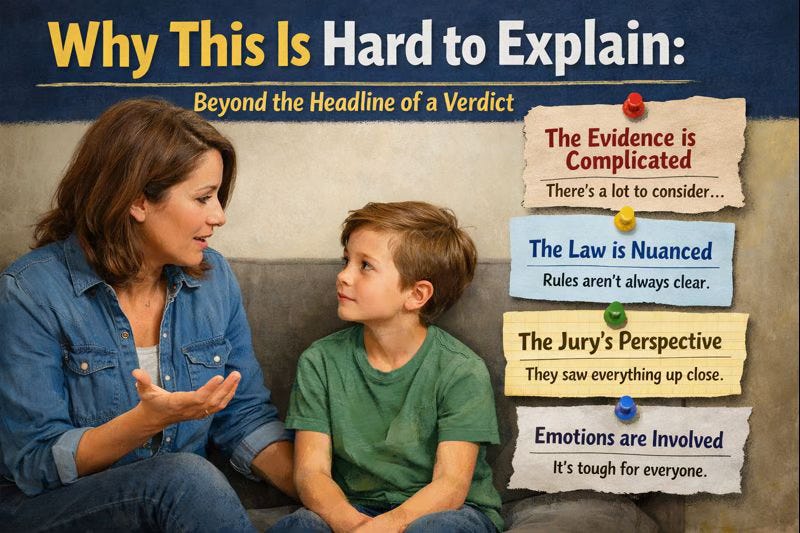
Parents strive to raise children who understand the world, yet often find themselves navigating complex news events with a deep-seated fear of overwhelming them.
This week’s news made something very clear: the public conversation around major legal rulings, particularly those involving public figures, is often less about the intricacies of justice and more about the immediate, emotionally charged outcome.
For children, understanding a verdict isn’t just about knowing who ‘won’ or ‘lost.’ It’s about grasping the layers of legal process, the concept of evidence, the roles of different people in a courtroom, and the difference between legal truth and public opinion. These are concepts that require significant context, far beyond a breaking news alert.
Adults often struggle to explain these events because even for us, the raw facts are frequently overshadowed by media narratives and personal biases. We ourselves are grappling with incomplete information and the weight of interpreting complex systems, making it difficult to distill into something clear and unbiased for a young mind.
The task isn’t to shield children from reality, but to equip them with the tools to process it. This means moving beyond the instant analysis and providing the foundational knowledge that allows them to place events into a broader, more coherent framework, fostering critical thought over reactive emotion.
How do we ensure that our children are not just exposed to the world’s complexities, but are truly prepared to understand and engage with them thoughtfully?